Media
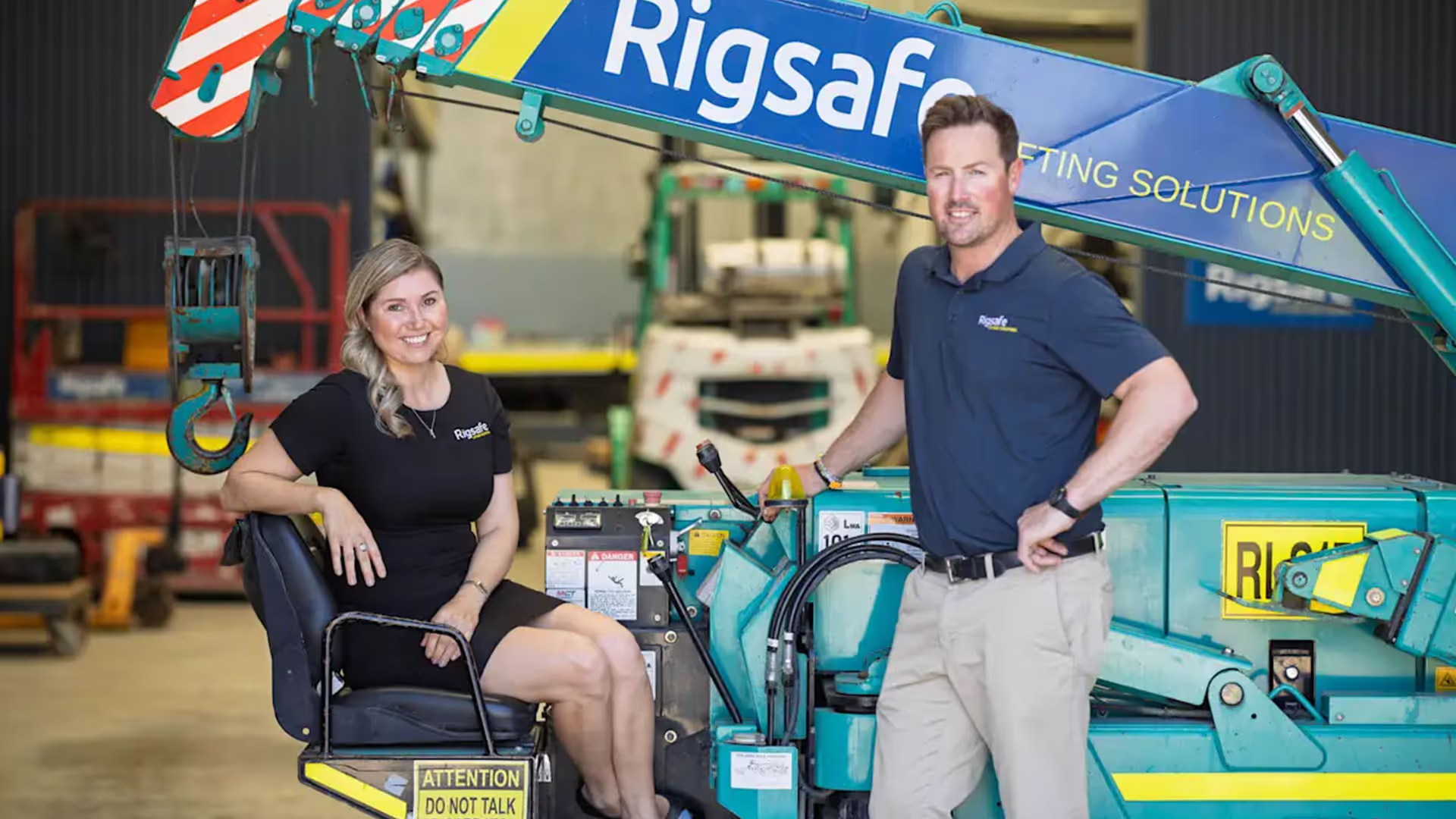
We’ve spent the past 12 months preparing for WA’s Defence boom - and now it’s right on our doorstep. In The Australian Financial Review, you can read about the steps we’ve taken to be ready, and how investing in our people has ensured Rigsafe is equipped for the work ahead. Kevin Fitzgerald and Tanya Fitzgerald outline our alignment with the Defence Industry Security Program, the uplift in governance and cyber processes, and the preparation required to meet security expectations of Defence projects.
His is not the average gig for a project development manager. But he is part of his employer’s calculated pivot away from Western Australia’s booming building and mining sectors towards its new explosive growth industry: defence.
“I’m more aware of the small details that keep people and assets secure,” Rowley said of the shift in mindset required to work on potentially top-secret military projects.
“The focus has always been on working safely and efficiently, but our preparation has pushed that awareness to another level – particularly around governance, information security and the cyber measures.”
Rigsafe director Kevin Fitzgerald said the company had invested heavily in retraining staff to capitalise on Perth becoming home to the largest submarine maintenance and shipbuilding hub in the southern hemisphere.
He said Rigsafe had spent more than double its operating budget over the past 12 months to comply with regulations on security and cybersecurity.
The multibillion-dollar overhaul of Perth’s Henderson shipyard is tipped to create more than 10,000 new skilled jobs over the next two decades. The nearby HMAS Stirling base on Garden Island is expanding to house nuclear-powered US submarines from 2032 under the $368 billion AUKUS security pact.
“There was conflicting information about whether [AUKUS] would or wouldn’t happen, but it’s real because you can see it already; we’ve got boots on the ground,” Fitzgerald told The Australian Financial Review.
“The amount of work coming is astronomical.”
Fitzgerald said defence work would soon account for more than a quarter of his total business.
Getting this far hasn’t been easy. Rigsafe took on additional projects to keep staff busy in a state where competition for skilled construction labour is high in the mining and construction sectors, so the company would be ready when the defence work rolled in.
“We had to fight really hard this year to keep all of our staff because we were looking at all of this defence work coming and knew if it fell into place, it’s like a tsunami of work coming,” Rigsafe business and strategy director Tanya Fitzgerald said.
“The strategy this year was just to keep the wheels spinning to ensure we were ready to win the projects we have, so that rehiring wouldn’t be a barrier.”
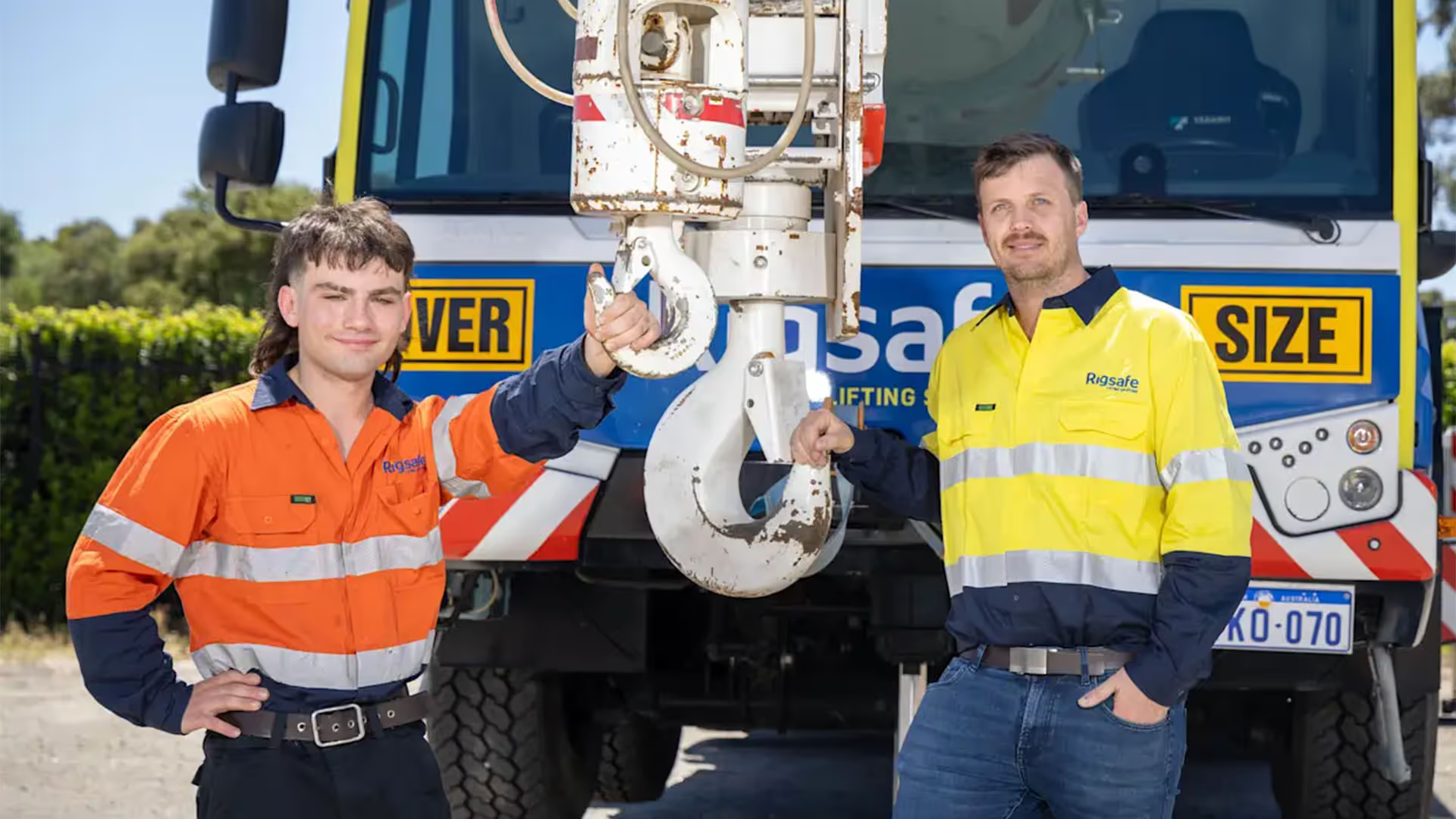
One selling point for workers was being able to return to their homes every night, rather than staying in a donga for weeks, as many fly-in, fly-out workers do.
The strategy is also employed by Perth-based Austal, the federal government’s designated shipbuilder. The company has landed billions of dollars in new defence contracts and is in line for more as AUKUS ramps up.
“It’s very hard to compete with the salary rates of the resources industry for FIFO and it’s not something defence would be willing to pay, especially with taxpayers’ money,” Austral chief executive Paddy Gregg said at a business breakfast in Perth on Tuesday.
“We focus very much on the people and their quality of life, being able to go home every night, the production team work a four-day week and the fact you can still see your kids play football or go fishing on the weekend.”
The impending battle for labour
AUKUS is expected to make the defence industry the second-largest contributor to Western Australia’s mining-dependent economy and be an alternative for workers drawn to the state’s $150 billion resources industry by lucrative wages but tired of the FIFO lifestyle.
The demand for major infrastructure upgrades and housing more than 1000 US and UK personnel by 2027 under AUKUS has sparked concerns about a three-way battle for labour among the construction, resources and defence industries.
Master Builders Western Australia chief executive Matt Moran warns the fight could stymie the state’s ability to meet its housing targets, which could, in turn, drive up house prices.
Data suggests 40,000-50,000 more workers will be needed in the WA building industry by the end of the decade to keep pace with the government’s targets.
“Building and construction are suffering from a critical worker shortage,” Moran said. He called on the state government to match a $20,000 incentive it offers defence contractors for building industry apprentices.
“We’re trying to increase the workforce and recruit apprentices as defence is ramping up, and there’s still competition with mining – all three markets are competing for talent simultaneously.”